How Come Your Garage Door Won’t Close: Troubleshooting and Repair Guide
A garage door that will not close can leave behind your home unprotected, leave belongings exposed to the weather, and signal a developing mechanical problem. The most common causes are obstructed safety sensors, an obstruction in the door path, damaged garage door tracks, a failing garage door opener, or broken hardware.
This guide explains safe garage door troubleshooting for Los Angeles homeowners, including what you can examine yourself, what requires a licensed garage door technician, and how to assess garage door repair cost. Because many Los Angeles homes use sectional overhead garage doors in single-car and two-car configurations, the right solution is determined by the door’s width, panel material, opener type, and condition.
Fast Safety Checks Before Troubleshooting
Before inspecting the garage door, keep children, pets, and vehicles away from the opening. Do not stand beneath a moving door, pull on loose cables, or place your fingers between door sections. A garage door can weigh hundreds of pounds, and a failed component can release stored energy suddenly.
Disconnect the garage door opener from its electrical supply before examining wiring or mechanical components. You may also unplug the opener or switch off its circuit breaker, but do not remove covers or work on internal electrical parts unless you are qualified.
Look at the entire garage door, not only the opener. Check for a visibly broken torsion spring above the door, separated extension springs along the sides, dangling lift cables, bent tracks, or panels that have shifted. If any of these conditions are present, stop operating the garage door and arrange professional service.
Safety sensors are located near the bottom of the garage door tracks. They should be mounted at similar heights and aimed directly at one another. A blinking sensor light, damaged wire, or loose bracket can cause the garage door opener to fail to close.
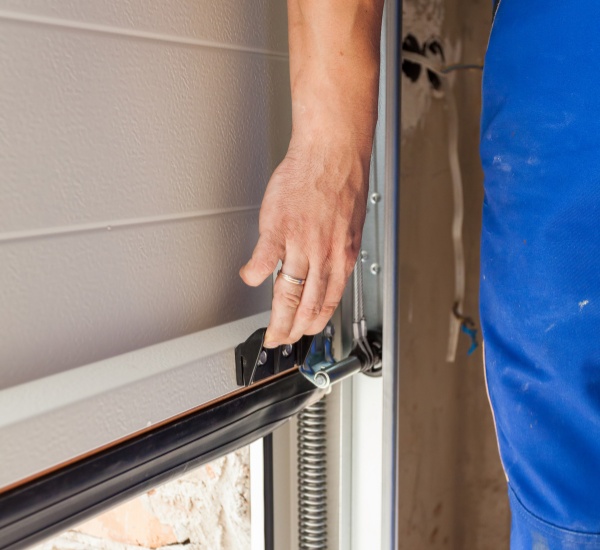
Frequent Reasons a Garage Door Will Not Close
A garage door will not close for several different reasons, and the behavior often offers a useful clue. The safety sensors may sense an obstruction, the garage door tracks may be bent or dirty, the garage door rollers may bind, or the garage door opener may have a remote, power, or programming issue.
Obstructed, Dirty, or Misaligned Safety Sensors
Photo-eye sensors create an invisible beam across the bottom of the opening. If something interrupts that beam, the opener is designed to keep the door from closing or to make the door reverse before closing. A trash bin, stored item, leaf, or even a spider web can create a blocked sensor condition.
Inspect both sensor lenses and remove dust, grease, cobwebs, or moisture with a soft cleaning cloth. Check the LED indicator lights. Depending on the opener brand, one or both lights may be steady when alignment is correct. A blinking sensor light commonly points to poor sensor alignment, a wiring issue, or a failed sensor.
Sensor alignment can move if a bracket is bumped, a screw loosens, or the garage door track shifts. Do not assume that replacing the opener is necessary until the photo-eye sensors, sensor brackets, and sensor wiring have been examined.
Obstructions, Damaged Tracks, or Worn Rollers
Examine the garage floor and the full door path for tools, toys, storage boxes, ice, dirt, or other obstruction. The garage door weather seal can also fold inward, harden, or catch on the floor. A damaged garage door weather seal may stop the door from seating correctly even when the opener is functioning.
Look for dents, bends, loose fasteners, or gaps in the garage door tracks. The garage door rollers should move smoothly without excessive wobbling, grinding, or binding. Worn garage door rollers can make the door loud and increase the load on the opener.
Never force a bent track back into position. Los Angeles homes can experience earthquake-related movement, and a shifted garage-door track should be examined by a qualified technician rather than forcibly realigned by a homeowner. Track brackets support substantial weight and must be installed correctly.
Remote, Wall Console, or Opener Issues
Test closing the door with the wall console and then with the garage door remote. If the wall console works but the remote does not, install a new remote battery, verify its programming, and make sure the remote is compatible with the garage door opener.
If neither control works, determine if the opener has power. Inspect the opener circuit breaker and confirm that the motor unit is plugged into its outlet. A power interruption, tripped breaker, damaged wall console, or faulty wiring can keep the opener from operating normally.
Do not repeatedly press the controls if the motor hums but the door does not move. Repeated attempts can strain the opener or make worse a mechanical problem.
Damaged Springs, Cables, or Other Components
A broken garage door spring is a serious mechanical issue. With a failed torsion spring, you may see a gap in the coil above the door. With extension springs, the spring may be extended, separated, or hanging loosely along the horizontal tracks.
Lift cables can come off their drums, unravel, or snap when a spring fails or the door becomes unbalanced. Drums, hinges, brackets, rollers, and other garage door hardware may also be damaged. Do not change spring tension, remove drums, or reconnect lift cables yourself. These parts can cause severe injury if released incorrectly.
Step by Step Garage Door Won’t Close Troubleshooting
Apply the following garage door troubleshooting sequence only for visual checks and straightforward homeowner-safe adjustments. If the door is crooked, unusually heavy, or supported by damaged hardware, stop before testing it.
Examine and Clean the Safety Sensors
First, check that the photo-eye sensors are installed on opposite sides of the opening at the same approximate height. Move objects from their path and clean both lenses with a dry or slightly damp cleaning cloth. Do not spray cleaner directly onto the sensors.
Gently check whether the sensor brackets move. If a bracket is loose, you may tighten an accessible mounting screw carefully, but do not bend the bracket aggressively. Check the sensor wiring for cuts, loose connections, or staples that have pierced the insulation.
After cleaning, operate the garage door opener. If the door closes normally, perform a safety reversal test: place a suitable flat object, such as a piece of wood recommended by the opener manufacturer, beneath the door and close it. The door should reverse when it contacts the object. Remove the object immediately after testing.
Check the Door Path and Track Alignment
Inspect the garage floor, the space beneath the door, and the area around the door panels. Remove any obstruction without touching cables or springs. Check whether the panels sit evenly and whether one side appears higher than the other.
Examine the garage door tracks for visible damage, loose track brackets, or debris. Do not lubricate the tracks as a substitute for repair, and do not loosen track brackets while the door is under tension. If the door panel rubs against a track, the track is bent, or the rollers are leaving the track, contact a professional.
Operate the Door in Manual Mode
Only perform this test when the door is fully closed and there are no visible broken springs or loose cables. Pull the manual release cord to disconnect the opener. The manual release, also called the emergency release, allows you to operate the door without the motor.
Lift the door gradually by hand. A well-adjusted door should move smoothly and remain fairly balanced at the halfway position. If it feels extremely heavy, drops, falls, or requires too much lifting force, stop immediately. This can indicate failed garage door springs, a damaged cable, or a major balance problem.
Do not continue using a door that falls or cannot stay in position. Reconnect the opener only if the door and its hardware appear safe and the release mechanism is securely engaged.
Reset and Test the Garage Door Opener
Some opener problems stem from incorrect opener travel limits or force settings. Travel limits tell the opener where the door should stop, while force settings control how much resistance the motor tolerates. A setting that is too sensitive may make the door stop or reverse prematurely.
Follow the manufacturer’s instructions before changing a travel limit or force adjustment. Never increase the force simply to make a damaged or binding door close. Excessive force can defeat the safety system and damage the door.
Reprogram the remote control if necessary and test the wall console. Then complete a safety reversal test. If the door still fails to close, reverses repeatedly, or behaves differently after a reset, professional inspection is safer than repeated adjustments.
What the Garage Door Problem May Indicate
If the garage door stops halfway through closing, the door may be binding in the tracks, encountering an obstruction, or reaching an improper travel limit. Worn rollers, a damaged panel, or excessive spring tension can also create this symptom.
If the garage door starts back up at once or the door reverses before closing, inspect the safety sensors first. Dirty lenses, sensor alignment problems, loose wiring, and sunlight interference can all affect the photo-eye system. A damaged bottom seal may also cause resistance.
If the garage door hums but does not move, the opener motor may be receiving power while the door is mechanically locked, disconnected, or too heavy because of a broken spring. Stop pressing the control repeatedly.
If the garage door comes down, slams, or drops rapidly, do not attempt further operation. This is an serious hazard involving springs, cables, drums, or other support hardware.
When to Quit Troubleshooting Yourself and Call a Professional
Call a garage door repair technician if you see a broken garage door spring, a frayed lift cable, a bent track, a loose drum, a split panel, or a door that has come off its tracks. Professional service is also appropriate when the opener makes strange sounds, the door is severely unbalanced, or basic sensor checks do not solve the problem.
A licensed garage door technician has the tools and training to secure the door, measure spring tension, replace cables, align tracks, and test the opener safely. Spring and cable repairs are not suitable do-it-yourself projects because the components can store dangerous energy.
For urgent security concerns, ask about emergency garage door repair. A technician may be able to close off the opening temporarily and explain which repairs are required immediately and which can wait.
Garage Door Repair Pricing in Los Angeles
Garage door repair rates in Los Angeles varies according to the part, door size, accessibility, brand, labor complexity, and whether service is needed during nighttime hours or weekends. Garage door repair rates should be explained before work begins, including parts, labor, inspection charges, and any service call fee.
A standard sensor calibration or changeout is generally lower in cost than spring work. The garage door spring cost also changes according to the spring type, door weight, cycle rating, and whether one or both springs should be replaced.
Request a written estimate and check whether the quoted price includes removal of old parts, testing, and warranty coverage. A low initial service call fee may not include repair labor or replacement components.
Average Costs for Sensors, Springs, Panels, and Openers
Sensor work may involve cleaning and alignment, swapping out a damaged photo-eye, or fixing sensor wiring. A spring https://bestgaragedoorlosangeles1-101-101-10.lowescouponn.com/manual-garage-door-repair-close-to-me-in-los-angeles repair usually costs more because the technician must carefully balance the door and inspect the cables, drums, bearings, and connected hardware. Searching for “garage door spring replacement near me” can help locate local providers, but check licensing, insurance, reviews, and written estimates rather than choosing only by price.
The state of a garage door panel affects the quote. A slight dent may be fixable, while a warped or split garage door panel may require replacement and color matching. Replacing a panel can also be unfeasible if the model is discontinued or several sections are worn out.
Garage door opener installation cost depends on motor power, the belt-drive or chain-drive configuration, smart features, battery backup, available ceiling clearance, and whether the existing electrical and mounting setup can be used again. Consider the opener, installation, programming, and safety testing when evaluating garage door repair cost.
Repair or Replacement: Which Option Makes More Sense?
Repair is usually feasible when the overhead garage door has intact panels, a steady frame, and only one failed component. Replacement may be the better choice when the door has widespread rust, repeated breakdowns, severe storm or earthquake damage, outdated hardware, or poor insulation.
Have contractors to identify door width and panel material in every estimate. Los Angeles properties commonly have single-vehicle and two-vehicle configurations, and the 2 car garage door replacement cost can vary considerably from a single-door project. Consumers may also see the phrase two car garage door replacement cost; both terms refer to the need to evaluate the opening size, construction, insulation, windows, hardware, and disposal.
Garage door replacement cost should account for the new door, tracks, springs, rollers, installation, haul-away, and opener compatibility where applicable. Review the total project rather than the price of the door alone.
Searching for Garage Door Repair Near Me in Los Angeles
When searching for garage door repair near me, look for a local company that clearly identifies its service area, business address, insurance, warranty terms, and technician qualifications. Los Angeles garage door repair providers should be familiar with sectional doors, narrow urban garages, detached garages, and the region’s varied climate.
Coastal areas such as Santa Monica, Venice, and Long Beach expose metal hardware and springs to salty, humid air. Ask the technician to check for corrosion on springs, cables, fasteners, tracks, and drums. In San Fernando Valley communities such as Van Nuys, North Hollywood, and Woodland Hills, heat and direct sun can cause weather seals, lubricants, and plastic sensor components to degrade sooner.
For a same-day problem, ask whether the company provides emergency garage door service and whether an emergency surcharge applies. Make sure that the person performing spring or cable work is qualified and that the estimate covers the complete repair.
How to Prevent Future Closing Problems
Consistent garage door maintenance helps identify minor issues before they keep the door from closing. Make sure the opening and garage floor clear, inspect the safety sensors, and pay attention to unusual sounds, jerking, uneven movement, or delayed reversal.
Use a garage-door-compatible lubricant on hinges, rollers, bearings, and spring components as specified by the manufacturer. Never put grease to the tracks, and do not use products that attract dust. Proper lubrication reduces friction without masking a damaged part.
Inspect weatherstripping and the garage door weather seal for splitting, compression, or gaps. Intense sunlight and warmth can wear out seals, particularly in Valley communities. Coastal rust checks are equally important in Santa Monica, Venice, and Long Beach.
Arrange an annual inspection of the door, opener, springs, cables, rollers, tracks, brackets, and reversal system. A skilled technician can check door balance, opener force, travel limits, and the safety reversal test. If an earthquake or building movement seems to have moved the door or track, have it inspected rather than attempting a force adjustment yourself.
Frequently Asked Questions
Why won't my garage door shut when the opener motor is running?
The leading causes are obstructed safety sensors, incorrect sensor alignment, an obstruction, damaged tracks, a broken spring, or a disconnected drive system. Wipe the photo-eye sensors and check the door path first. If the motor runs but the door is heavy, crooked, or will not move manually, discontinue use of the opener and call a professional.
What should I do when my garage door safety sensors are misaligned?
Remove obstructions, wipe both sensor lenses, and verify that the sensor brackets face one another at the same height. Check for loose mounting screws and damaged sensor wiring. If the indicator lights remain off or blinking after these checks, the sensor or wiring may need replacement by a technician.
EM Garage Doors And Gate Service Inc19629 Cantara St, Reseda, CA 91335
(818) 919-0785
https://emgaragedoorsandgateservice.com/
https://maps.app.goo.gl/XujLWxA4pAQKARQT8
34.2193569, -118.5613022
How expensive is garage door repair in Los Angeles?
Garage door repair cost differs by the problem and door type. Sensor work is typically easier than spring, cable, track, panel, or opener repairs. Obtain an itemized estimate that explains garage door repair pricing, the service call fee, labor, parts, disposal, testing, and warranty terms.
Is it better to repair or replace my overhead garage door?
Repair is generally sensible when the overhead garage door is structurally sound and has one isolated failure. Replacement may be more practical when several components are worn, panels are damaged, corrosion is widespread, or the door repeatedly fails. Compare the complete garage door replacement cost with the expected cost of continuing repairs.
Where can I find dependable garage door spring replacement near me?
Search for local providers offering garage door spring replacement near me, then verify licensing, insurance, experience, warranty coverage, and written pricing. Choose a qualified technician who inspects the full door system, including lift cables, drums, rollers, tracks, and balance, rather than replacing only the visible spring.